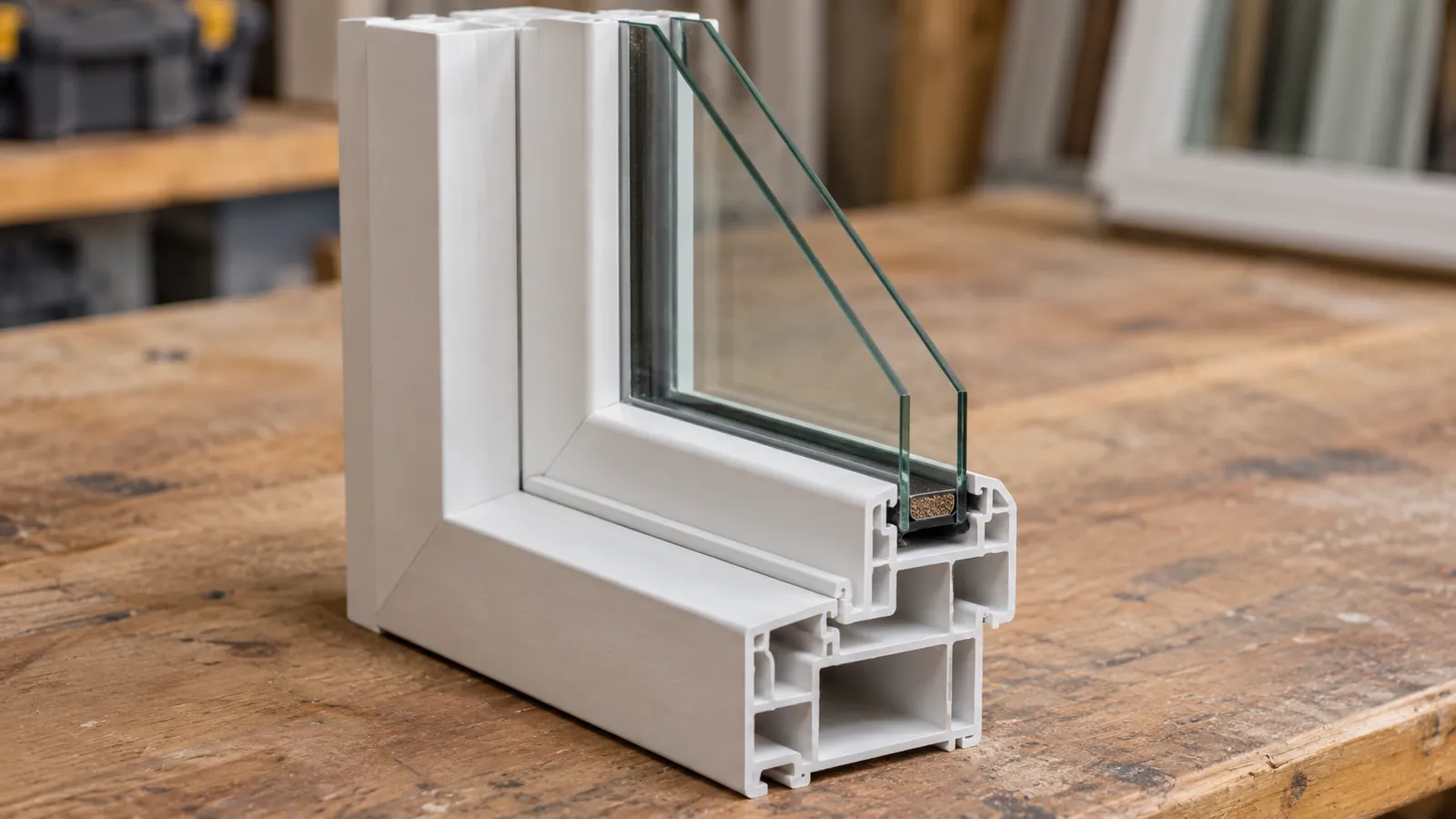
How low-E works
A microscopically thin metal coating on the glass reflects infrared heat while letting visible light through. In summer it bounces sun heat back outside; in winter it reflects room heat back in. Many dual-pane windows also fill the gap between panes with argon gas for extra insulation.
Read the label
- U-factor — lower means less heat loss
- SHGC — lower means less solar heat coming in
- Visible transmittance — higher means more daylight
Albuquerque is in ENERGY STAR's north-central zone. Windows certified for that zone meet PNM's rebate standard.
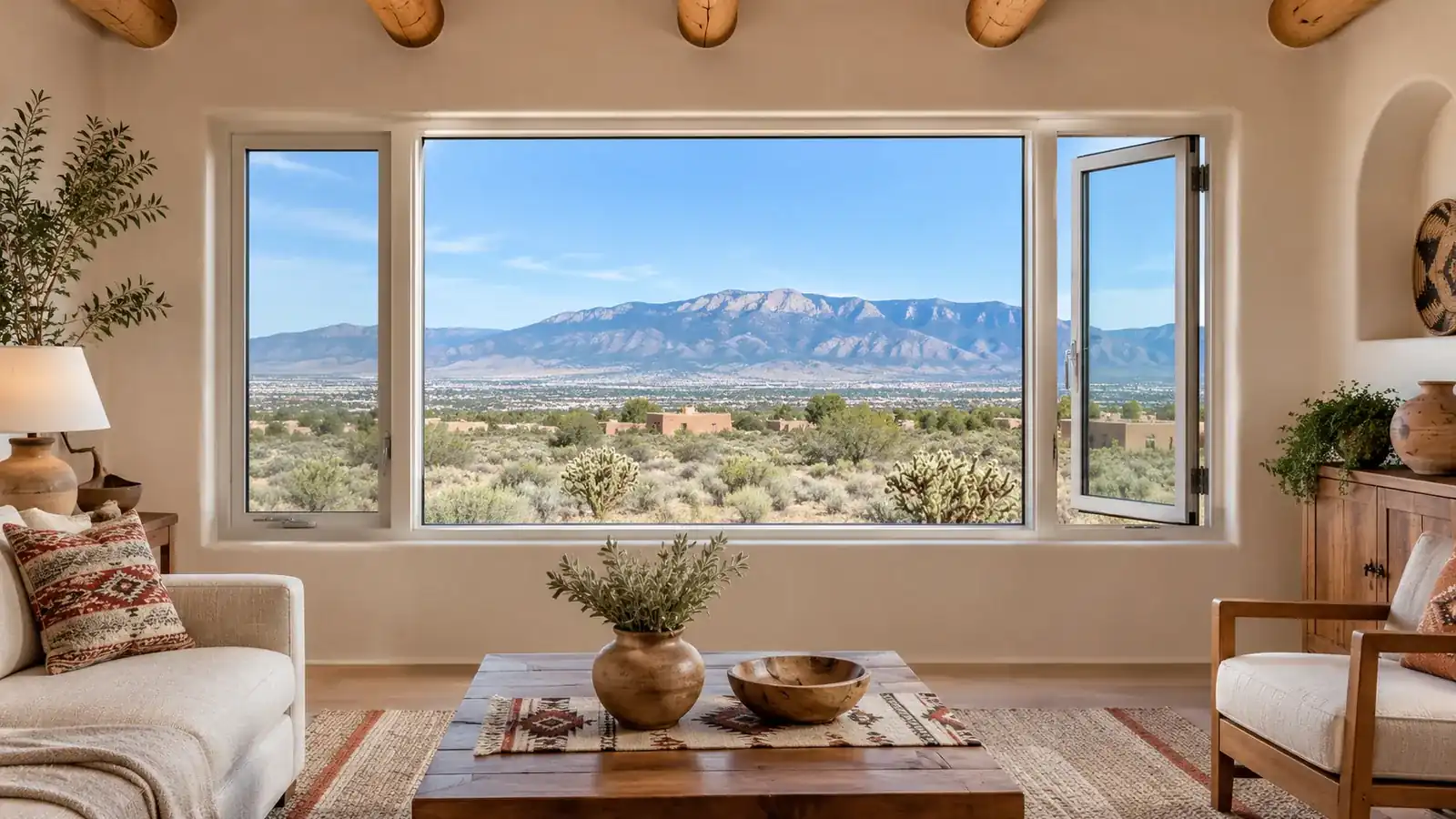
Think by direction
| Wall | Priority |
|---|---|
| West | Low SHGC to block hot afternoon sun |
| South | Balance; overhangs help in summer, sun is welcome in winter |
| East | Moderate SHGC; morning sun is milder |
| North | Low U-factor for winter |
Elevation
Albuquerque sits around 5,000 feet, and the East Mountains and Santa Fe are higher. Sealed glass units built at low elevation can be affected by the pressure change. Western manufacturers account for this, but it's worth confirming for any brand shipped from far away.
Call (505) 616-3368 and we'll match glass to each side of your house.
Common questions
Does low-E make windows darker?
Most modern low-E coatings are nearly invisible. Strong solar-control coatings can look slightly tinted.
Is argon gas worth it?
It's standard in most quality dual-pane windows and adds insulation at little cost.